
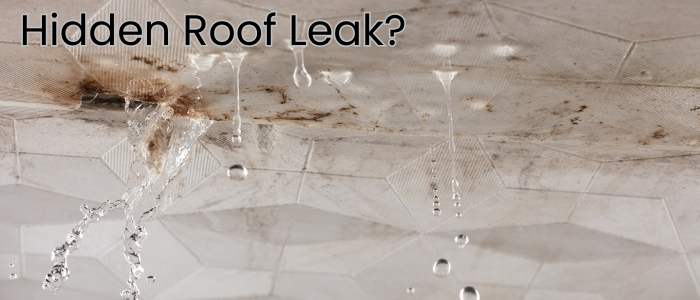
Most homeowners assume a roof leak begins with water dripping from the ceiling during a heavy rainstorm. In reality, that’s often the final stage of a problem that may have been developing for weeks or even months. Hidden roof leaks usually start quietly, allowing moisture to spread through the roof deck, attic insulation, rafters, and interior walls before obvious damage appears. By the time you notice a stain on your ceiling, the leak has often caused more damage than expected.
For homeowners , where roofs face intense sunlight, hailstorms, heavy rain, and strong winds throughout the year, recognizing these early warning signs can help prevent expensive repairs and extend the life of the roofing system.
Why Hidden Roof Leaks Are So Difficult to Detect
Unlike a burst pipe, roof leaks rarely allow water to travel straight downward. Rainwater often enters through damaged shingles, worn flashing, cracked vent boots, or roof valleys before moving horizontally along the roof decking or wooden rafters. This means the stain inside your home may be several feet away from the actual point where water entered the roof.
Because of this, homeowners sometimes repair the visible damage indoors while the real roofing issue continues to worsen.
The longer moisture remains trapped inside the roofing system, the greater the chance of mold growth, wood rot, damaged insulation, and structural deterioration.
Common Causes of Roof Leaks and Their Estimated Frequency
| Roof Leak Cause | Estimated Share of Residential Roof Leaks | Risk Level | Notes |
|---|---|---|---|
| Flashing failure | 30–40% | Very High | The leading cause of roof leaks, especially around chimneys, walls, and skylights. |
| Roof penetrations (vents, pipes, skylights, chimneys) | Up to 90% (combined with perimeter leaks) | Very High | Most diagnosed leaks occur at penetrations and roof edges rather than in the middle of the roof. |
| Missing or damaged shingles | Common | High | Often caused by wind, hail, or aging materials. |
| Cracked pipe boots | Very Common | High | Rubber pipe boots often fail before shingles wear out. |
| Roof valleys | Common | High | Valleys carry large amounts of rainwater and become vulnerable if flashing or underlayment fails. |
| Clogged gutters | Common | Medium | Overflowing water can back up beneath shingles and flashing. |
| Aging roofing materials | Common | Medium–High | Older roofs are more susceptible to cracks, granule loss, and water intrusion. |
Ceiling Stains That Slowly Become Larger
One of the earliest and most recognizable signs of a hidden roof leak is a small yellow, brown, or copper-colored stain on the ceiling.
At first, the spot may appear harmless. It might even dry out after several sunny days, leading homeowners to believe the problem has disappeared. Unfortunately, that’s rarely the case.
A ceiling stain usually indicates that water has already traveled through multiple roofing layers before reaching the drywall. Each rainfall adds a little more moisture, causing the stain to become darker and larger over time.
In many Texas homes, these stains first appear in bedrooms, hallways, living rooms, or around recessed lighting fixtures located beneath the roof.
Ignoring even a small stain can eventually lead to sagging drywall, peeling paint, and expensive ceiling repairs.
Peeling Paint or Bubbling Drywall
Paint naturally lasts for years when interior humidity remains stable.
However, when hidden moisture enters the walls or ceiling from above, the paint begins separating from the surface underneath.
You may notice:
- Small paint bubbles
- Cracked ceiling texture
- Soft drywall
- Peeling paint near corners
These symptoms often appear before active dripping begins.
Because water slowly weakens drywall paper and gypsum, the surface loses its ability to hold paint securely.
Many homeowners repaint the affected area without fixing the roof leak, only to see the same bubbles return after the next storm.
A Musty Smell That Doesn’t Go Away
Sometimes your nose detects a hidden roof leak before your eyes do.
If your attic, upstairs hallway, or spare bedroom has developed a persistent damp or musty odor, trapped moisture could be feeding mold or mildew behind walls or above the ceiling.
This smell is especially common after periods of heavy rain followed by hot Texas weather, which creates warm, humid conditions inside the attic.
Even if no mold is visible, lingering odors deserve investigation because moisture trapped in insulation or wooden framing can remain hidden for months.
Damp or Compressed Attic Insulation
The attic is often the first place where hidden roof leaks reveal themselves.
Healthy insulation should feel dry, fluffy, and evenly distributed.
If sections appear:
- Wet
- Heavy
- Flattened
- Compressed
- Darkened
water may be entering through the roof above.
Wet insulation loses much of its insulating performance, forcing heating and cooling systems to work harder throughout the year.
In Texas, where summer temperatures frequently exceed 100°F, damaged insulation can significantly increase monthly energy bills while making rooms harder to cool.
Unexpected Increases in Energy Bills
Many homeowners never associate higher utility bills with roofing problems.
Yet a hidden roof leak can reduce attic insulation performance, disrupt ventilation, and allow conditioned air to escape more easily.
As insulation becomes damp, it loses its ability to resist heat transfer.
Your HVAC system then runs longer to maintain indoor comfort.
If your electricity bills have steadily increased despite similar weather conditions and normal HVAC maintenance, a roof inspection may reveal moisture damage hiding above your ceiling.
Mold Growth Near Ceiling Corners
Mold requires three basic conditions:
- Moisture
- Organic material
- Limited airflow
A hidden roof leak provides all three.
Small black, green, or gray spots near ceiling corners, around attic framing, or along upper walls often indicate ongoing moisture intrusion.
Besides damaging your home’s structure, mold may also affect indoor air quality, particularly for individuals with allergies or respiratory conditions.
Removing visible mold without correcting the source of moisture almost always results in the problem returning.
Sagging Ceilings and Warped Wood
A hidden roof leak doesn’t only damage drywall. As moisture continues entering the home, wooden framing members can begin absorbing water and slowly losing strength.
One of the most serious warning signs is a ceiling that appears:
- Slightly bowed
- Uneven
- Soft when pressed
- Cracked around joints
In advanced cases, the ceiling may begin sagging noticeably. This indicates that water has been accumulating for an extended period and should be addressed immediately.
Wood trim around windows, doors, or ceiling edges may also start warping or separating as repeated moisture exposure causes expansion and contraction.
Exterior Signs Homeowners Often Miss
Many hidden leaks can be identified before interior damage becomes obvious if you inspect the roof and exterior regularly.
Watch for:
- Missing or lifted shingles
- Cracked flashing around chimneys
- Damaged vent boots
- Granules collecting in gutters
- Rust around roof penetrations
- Debris trapped in roof valleys
Texas storms frequently create small points of damage that may not cause an immediate leak but allow water to enter during later rain events.

Water Around Light Fixtures
Recessed lights, ceiling fans, and attic access panels are common places where hidden roof leaks become visible.
If you notice:
- Water rings around fixtures
- Discoloration near electrical boxes
- Condensation that appears after rain
don’t ignore it. Water and electricity are a dangerous combination, and a roof leak affecting electrical components should be inspected quickly.
Gutters That Overflow Near One Area
Sometimes the roof itself isn’t the only problem.
Clogged gutters can force water back under shingles and flashing. If you consistently see overflow in the same section of the house, that area may be experiencing moisture intrusion even before interior symptoms appear.
Regular gutter cleaning is one of the simplest ways to reduce the risk of hidden roof leaks.
When Should You Call a Roofing Professional?
You don’t need to wait for active dripping.
Schedule a professional roof inspection if you notice:
- A new ceiling stain
- Persistent musty odors
- Wet attic insulation
- Mold near upper walls
- Missing shingles after a storm
- Unexplained increases in energy bills
Professional roofers can often identify the actual entry point of water using moisture meters, attic inspections, and exterior evaluations.
Texas-Specific Roof Leak Prevention Tips
Because Texas roofs face extreme heat, hail, wind, and heavy rain, homeowners should be especially proactive.
At least twice a year:
- Inspect shingles after major storms.
- Check flashing around chimneys and vents.
- Clean gutters and downspouts.
- Look for attic moisture during rainy periods.
- Trim branches that touch the roof.
- Schedule a professional inspection after significant hail events.
Preventive maintenance is almost always less expensive than repairing water damage, mold, insulation loss, and structural deterioration.
Frequently Asked Questions
What is the first sign of a hidden roof leak?
The first sign of a hidden roof leak is often a small ceiling stain, peeling paint, or a musty smell in the attic or upper floors. Water can travel along roof decking and rafters before becoming visible, so the actual leak may be several feet away from the stain you notice.
Can a roof leak exist without dripping water?
Yes. A roof leak can remain hidden for weeks or even months without producing visible drips. Moisture may soak insulation, damage roof decking, or promote mold growth before reaching the ceiling, making regular roof inspections essential for catching problems early.
Why does my ceiling have a water stain but no active leak?
A ceiling stain doesn’t always mean water is currently dripping. It may be left behind after a previous storm, or moisture may only enter during heavy rain or wind-driven storms. A professional inspection can determine whether the leak is active and identify its true source.
How can I tell if mold is caused by a roof leak?
If mold appears near the ceiling, attic, or upper walls after rain, a hidden roof leak may be the cause. Moisture from roof leaks creates ideal conditions for mold growth, especially in poorly ventilated attic spaces where damp insulation and wood remain wet for extended periods.
final thought
A hidden roof leak is one of the most expensive roofing problems because it often causes damage long before homeowners realize it’s there. Ceiling stains, peeling paint, musty odors, wet insulation, mold growth, sagging drywall, and rising energy bills are all warning signs that deserve attention.
For Texas homeowners, early detection is especially important due to the state’s intense weather conditions. A small leak after a storm can quickly become a major repair involving insulation, drywall, framing, and mold remediation.